


AI Compute Center Design & Integration from Day 0 to Day 1
Building a modern AI compute center requires aligning high-density GPU servers with facility power, advanced cooling, and high-bandwidth networking. BEIJING YINTAI offers comprehensive AI compute center integration services, acting as your technical partner from the initial blueprint to the final cluster power-on.
Focusing on the “Day 0 to Day 1” deployment phase, we help enterprises and data center operators design and integrate intelligent computing centers. We coordinate infrastructure planning to support physical robustness, thermal stability, and readiness for large language models (LLMs) and high-performance computing workloads upon delivery.
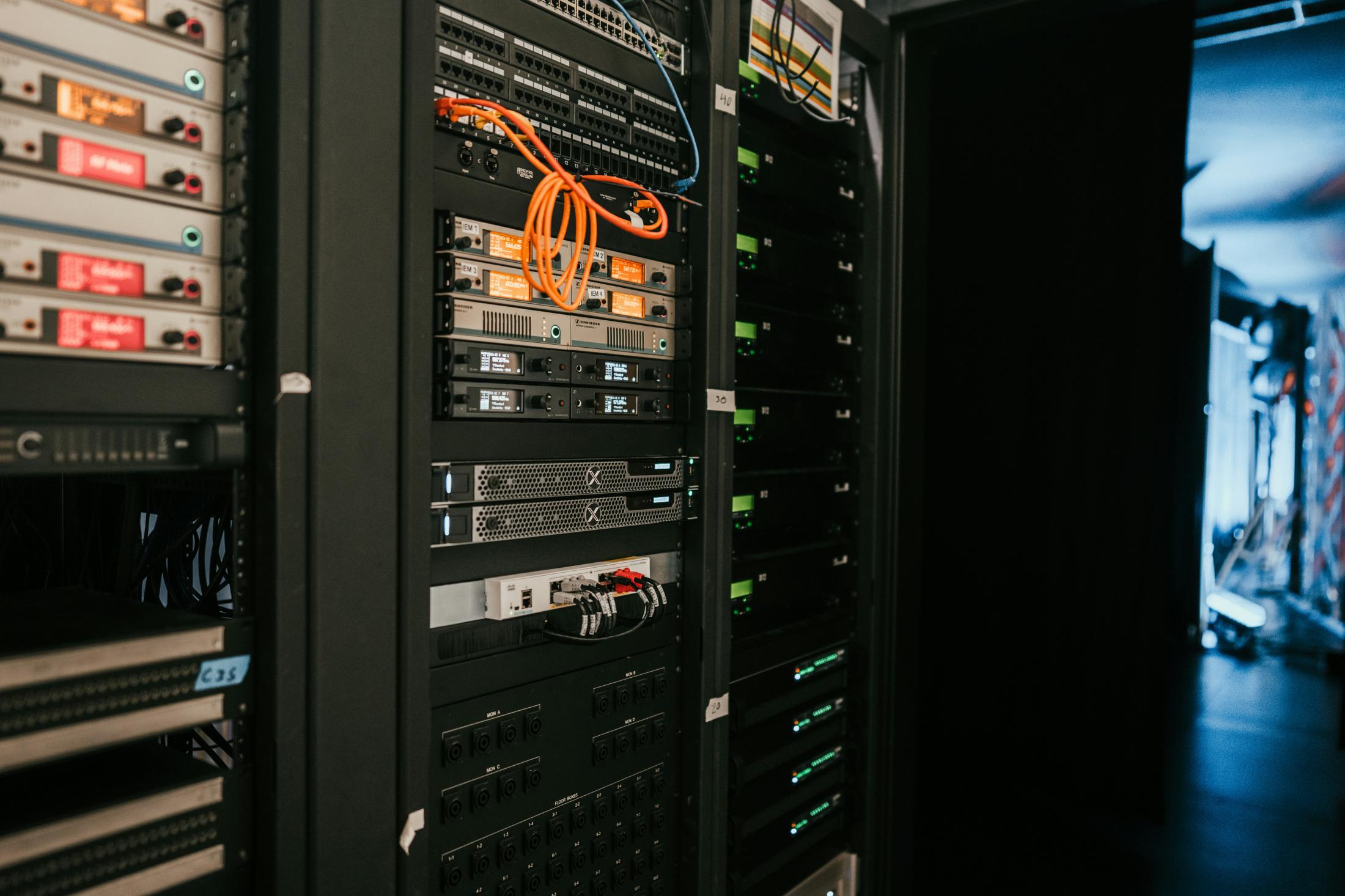
Using partner manufacturing and integration capabilities, racks can be assembled and cabled in a controlled environment. An agreed Factory Acceptance Test (FAT) may cover burn-in, network topology, storage throughput, firmware baselines, and other project criteria before shipping. Pre-integration can reduce on-site work, but final readiness depends on site installation, Site Acceptance Testing (SAT), software configuration, and customer approval.
Service Overview

Facility & Thermal Planning
Assessing site power and designing cooling strategies to support high-density AI racks.
Rack-Scale Integration (L10)
Pre-cabling, configuring, and testing servers, storage, and switches at the rack level.

Private AI Enablement
Assisting with the architectural setup for deploying private AI models securely.

Turnkey Deployment (L11)
Delivering integrated hardware, including modular compute containers.

Hardware-Aware Design
Aligning power, cooling, and network infrastructure with modern AI accelerators.
Project Phases and Deliverables
Comprehensive ODM Capabilities

Discovery and Workload Profiling
A successful AI compute center starts with a clear workload profile. The project team reviews applications such as LLM training, high-throughput inference, or computer vision, then translates model, throughput, memory, storage, network, power, and growth requirements into a candidate hardware architecture.
This phase can include capacity and growth modeling. Aligning hardware selection with the workload profile helps buyers compare initial capacity, expansion paths, peak-demand assumptions, and capital constraints without treating a forecast as a performance guarantee.
Site Survey and Infrastructure Alignment
A critical step in our integration process is a comprehensive site survey. We evaluate your facility’s power capacity, cooling infrastructure, and physical space constraints. For high-density AI clusters, we assess the feasibility of deploying advanced cooling solutions, such as cold plates or full immersion cooling, based on your site’s specific conditions.
Power distribution, cooling, fabric, and storage networks are planned against the selected GPU platforms and workload assumptions. For suitable climates, load profiles, supply and return temperatures, system boundaries, and final designs, liquid-cooled projects may target a PUE at or below 1.05; this remains a project objective subject to design modeling, commissioning data, measurement boundaries, and site validation.
Rack-Scale Pre-Integration and Testing
To reduce on-site integration work, BEIJING YINTAI can coordinate rack-scale pre-integration (L10 delivery). Qualified partners assemble the agreed servers, storage, switches, power distribution, and cabling in a controlled environment. The exact integration boundary is defined in the bill of materials, rack elevation, cable schedule, and responsibility matrix.
Before shipment, the project can complete an agreed Factory Acceptance Test (FAT). The plan may include firmware and software baselines, burn-in, cable checks, network validation, storage throughput, hardware inventory, and issue closure. FAT results apply to the documented configuration and test conditions; final performance and interoperability are confirmed during site acceptance.
Private AI Enablement and Handover
Beyond hardware integration, the service can assist with private AI enablement. For organizations with data-sovereignty requirements, the project may include deployment architecture, software-stack configuration, management tools, and handover tasks. Security controls, model licensing, data governance, and application acceptance remain subject to the customer’s policies and the agreed scope.
The final phase is Site Acceptance Testing (SAT) and formal handover. We verify that the integrated system meets the performance and stability criteria in your actual facility. We provide comprehensive documentation, including rack elevations, BOMs, and cabling diagrams, empowering your IT team to manage the new infrastructure effectively. For ongoing support, we offer comprehensive data center operation and maintenance services.
Project Phases and Deliverables
Cooling Decision Matrix
Applications or Use Cases
Information Required for Design
Why BEIJING YINTAI
BEIJING YINTAI coordinates between buyers, engineering partners, manufacturing partners, and site teams for Day 0–Day 1 AI compute center projects. Defined review gates, pre-integration, FAT, SAT, and handover documentation can reduce avoidable on-site work and clarify responsibility. Final performance, schedule, and acceptance remain tied to the approved design, site readiness, supply conditions, and contract criteria.


