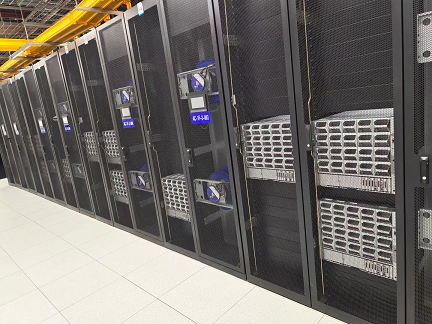



AI Data Center Solutions
AI Data Center Solutions from Architecture to Lifecycle Operations
Transform your AI infrastructure plans into operational computing capacity with end-to-end AI data center solutions from BEIJING YINTAI. Building a modern intelligent computing center requires precise coordination of facility power, thermal dynamics, network topology, and ongoing maintenance. As an authorized global solutions provider, we bridge the gap between hardware manufacturing and facility operations.
From initial architecture consulting and rack-scale integration to private AI model deployment and lifecycle operations, we help enterprises, cloud providers, and research institutions build highly efficient data centers. Our hardware-aware design approach addresses bottlenecks, optimizes power and cooling, and accelerates deployment.
Whether deploying a traditional air-cooled facility, transitioning to liquid cooling, or leveraging prefabricated compute containers, our lifecycle delivery framework provides a cohesive path from Day 0 strategy to Day 2+ operations.
Product Overview
| Capability | Description |
|---|---|
| Hardware-Aware Design | Facility power and cooling optimized around the thermal profiles of the IT equipment. |
| Rack-Scale Integration | Pre-integrated L10 rack delivery to reduce on-site deployment time and complexity. |
| Cooling Flexibility | Support for air cooling, cold-plate liquid cooling, and native immersion cooling paths. |
| Software Enablement | Intelligent O&M platforms and private LLM deployment support. |
| Lifecycle Operations | Comprehensive Day 2+ services including monitoring and spare parts management. |
| Modular Deployment | Prefabricated compute containers for rapid, scalable infrastructure expansion. |
End-to-End Lifecycle Delivery Framework
Our AI data center solutions provide a holistic approach to infrastructure deployment, supporting progression from initial planning to ongoing operations. By maintaining a lifecycle perspective, we coordinate the execution details typically handled by specialized integration or maintenance teams, focusing on the overarching strategy and architectural alignment.

Day 0: Architecture Consulting and Capacity Planning
We begin by profiling your specific AI workloads, distinguishing between the high-bandwidth demands of large language model (LLM) training and the low-latency requirements of AI inference. This dictates hardware selection, rack density limits, and the long-term infrastructure roadmap. Our engineering team conducts site surveys and capacity modeling to align your compute goals with available facility resources. We evaluate power distribution architectures and determine the optimal cooling strategy. By integrating these facility-level decisions with the IT hardware specifications early, we help prevent costly retrofits.
Day 1: System and Rack-Scale Integration
Our Day 1 integration services focus on speed, quality, and risk mitigation. We utilize a rack-scale integration model, assembling AI servers, high-speed storage, and low-latency networking through qualified manufacturing partners before they reach your site. This L10 delivery approach significantly reduces on-site integration time and minimizes configuration errors. During the pre-integration phase, we conduct rigorous factory acceptance testing (FAT). Once delivered, our deployment teams handle the final site acceptance testing (SAT), power connections, and network fabric integration. For projects requiring rapid or remote deployment, we offer prefabricated compute containers that integrate racks, power, backup, cooling, and monitoring systems into a modular block.
Day 2+: Intelligent Operations and Lifecycle Management
Our Day 2+ operations services provide the ongoing support necessary to maintain uptime and protect your capital expenditure. We deploy an intelligent operations and maintenance (O&M) platform offering centralized monitoring, AI-assisted diagnostics, and full-stack management frameworks. Our service matrix includes remote and on-site system diagnostics, component-level board repair, and comprehensive spare parts management. For covered regions under an agreed SLA, we can provide rapid on-site response and dedicated resident engineers to support your cluster. We also assist with the local deployment of private large language models and scenario-based AI applications.
Hardware-Aware Facility Design
Because our engineering foundation is rooted in server design, our data center solutions are inherently hardware-aware. We understand the intricate thermal dynamics, power draw characteristics, and physical dimensions of current AI accelerators.
This deep hardware knowledge allows us to optimize the facility’s power and cooling infrastructure around the requirements of the IT equipment. We can target PUE at or below 1.05 under suitable site, climate, and system conditions by aligning server-level thermal management with facility-level cooling loops. This holistic approach addresses cooling bottlenecks and supports high compute density per square foot.
Delivery Models
| Delivery Models | Form Factor | Scope and Deployment |
|---|---|---|
| L6 Barebone | Motherboard / Barebone System | Custom engineering and manufacturing for server providers and integrators. |
| L9/L10 Full System | Complete AI Server / Integrated Rack | Fully assembled and tested servers or pre-integrated racks for standard data center deployment. |
| L11 Container | Immersion Cooling / Compute Container | Prefabricated, modular data center blocks for rapid, outdoor, or edge deployment. |
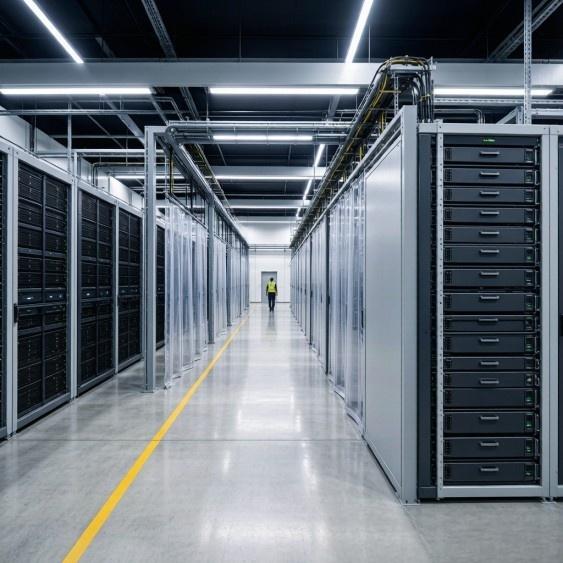
AI Data Center Solutions
End-to-end intelligent computing center solutions from architecture to operations, with hardware-aware power and cooling design supporting air, cold-plate, and immersion cooling.
Why BEIJING YINTAI
Choosing BEIJING YINTAI means partnering with an engineering-backed solutions provider capable of bridging the gap between IT hardware and facility infrastructure. Our deep expertise in server design, combined with our partner manufacturing capabilities, supports the optimization of your data center for performance and reliability. We offer flexible delivery models, from L6 barebones to L11 compute containers.
Applications and Use Cases
Intelligent Computing Centers
Design and deployment of large-scale GPU clusters for AI hubs.
Enterprise Private AI
Secure deployment of AI infrastructure for private large language models.
High-Density Research Clusters
Implementation of liquid-cooled environments for supercomputers.
Modular Edge Deployments
Utilizing compute containers to deploy AI capabilities in remote locations.
Selection and Project Planning Guide
We recommend gathering the following information before initiating the design phase:
1. Workload Profile: Specify the primary applications and compute cluster scale.
2. Facility Constraints: Provide details on physical space, power capacity, and cooling infrastructure.
3. Deployment Timeline: Outline target dates for planning, integration, and handover.
4. Cooling Preferences: Indicate preferences for air or liquid cooling.
5. Service Level Requirements: Define the expected SLA for ongoing operations.