


Data Center Operation & Maintenance Services for Day 2 and Beyond
High-density AI clusters place unusual demands on operations teams. GPU nodes combine high thermal output, complex interconnects, specialized firmware, distributed storage, and expensive accelerator assets. A failure that appears to be a server issue may originate in a baseboard, network adapter, power path, cooling subsystem, or configuration change. Effective data center operation and maintenance services must therefore connect monitoring, diagnosis, field response, repair, spare parts, and reporting into one operational workflow.
BEIJING YINTAI provides lifecycle operation and maintenance support for enterprise data centers, AI laboratories, intelligent computing centers, and distributed compute sites. We design the service scope around the installed equipment, workload criticality, facility location, internal staffing, and required response model. The result can range from remote technical support and scheduled preventive maintenance to resident engineering and a fully coordinated service program.
Our role starts after deployment and continues through expansion, upgrade, reconfiguration, repair, and eventual asset reuse. When combined with our AI compute center design and integration and component-level data center GPU repair capabilities, this creates a practical path from initial handover to stable long-term operation.
At a Glance O&M Capability

Centralized Monitoring
Visibility into hardware health, temperatures, power conditions, alarms, and recurring fault patterns.

Remote and On-Site Diagnosis
Structured triage that narrows incidents from system symptoms to boards, modules, or other replaceable units.

Preventive Maintenance
Planned inspections, cleaning, thermal checks, firmware review, cabling verification, and risk reporting.

Resident Engineering
Dedicated on-site personnel for daily checks, incident coordination, change support, and operating records.

Spare-Parts Coordination
Recommended spare lists, stock planning, warehouse support, dispatch workflows, and replacement tracking.

Specialist Repair Access
Escalation to board-level diagnostics for GPUs, BaseBoards, switch boards, motherboards, and selected network cards.
Comprehensive ODM Capabilities

Intelligent Monitoring and Structured Incident Management
A useful O&M platform must do more than display alarms. It should help operations teams understand which alarms are related, when a pattern began, what changed before the event, and which action is most likely to restore service. BEIJING YINTAI can coordinate a software-assisted O&M framework that combines equipment status, service tickets, maintenance records, and diagnostic findings into a more consistent operating process.
When an incident occurs, the service desk first confirms its operational impact and collects logs, error codes, firmware information, recent changes, and environmental data. Remote engineers then separate configuration, software, network, cooling, and hardware possibilities. If a field visit is required, the engineer arrives with a defined diagnostic plan rather than repeating basic discovery on site. After recovery, findings can be documented through a root-cause analysis and recommended corrective actions.
This closed-loop method helps reduce repeated faults and gives customers a clearer maintenance history. It is particularly valuable for heterogeneous clusters in which servers, accelerators, storage, and network equipment come from multiple suppliers.
Preventive Maintenance, Change Control, and Capacity Health
AI infrastructure should not be maintained only after a failure. Preventive work identifies thermal drift, connector wear, fan degradation, dust accumulation, firmware inconsistency, cable stress, and abnormal error trends before they cause a larger outage. Maintenance frequency is determined by workload intensity, facility conditions, equipment age, redundancy, and business criticality rather than by a universal schedule.
A typical program may include hardware-health review, environmental and power checks, BMC and event-log analysis, firmware baseline management, physical inspection, thermal-material assessment, network-link verification, and selected stress tests. For immersion-cooled systems, the checklist can also address fluid condition, material compatibility observations, filtration, pumps, heat exchangers, and leak monitoring. Every planned action should follow an approved change process with rollback provisions appropriate to the customer’s environment.
Capacity health is also part of O&M. As clusters grow, rack power, cooling headroom, fabric utilization, storage throughput, and spare-parts demand may change. Periodic operational reviews can expose these constraints before an expansion project is approved.
Field Service, Resident Engineers, and Spare-Parts Support
Field coverage is configured by region and contract. For eligible locations and critical workloads, a four-hour on-site response target and a 12-hour spare-parts loop may be available in covered regions under an agreed SLA. These targets are not universal: actual coverage depends on facility location, parts placement, customs and logistics, fault classification, access procedures, and the final service agreement.
Resident engineering is appropriate where the customer needs daily physical presence or faster coordination across many racks. Resident engineers can perform routine checks, manage incident escalation, support approved hardware changes, maintain service records, coordinate vendors, and verify that replacement assets are returned to the correct configuration. They work with remote specialists and the customer’s own operations team rather than replacing the customer’s governance responsibilities.
Spare-parts planning begins with an installed-base assessment and failure-impact analysis. BEIJING YINTAI can help define recommended holdings for power supplies, fans, memory, drives, cables, network adapters, motherboards, GPU-related boards, and other project-specific components. Options may include customer-owned stock, coordinated warehouse support, or dispatch from an agreed service inventory, subject to availability and commercial terms.
O&M Service Matrix
Applications and Operating Scenarios

AI training clusters need rapid identification of node, fabric, and accelerator faults because degraded components can interrupt distributed jobs or reduce useful cluster capacity. Production inference platforms require controlled changes and predictable spare-parts workflows to protect customer-facing services. Enterprise private clouds benefit from preventive maintenance, firmware discipline, and consolidated reporting across mixed hardware. Research and university environments often need specialist diagnosis for heterogeneous or long-lived systems where replacement budgets are limited. Distributed and edge sites rely more heavily on remote visibility, clear dispatch procedures, and carefully selected local spares because specialist staff may not be permanently present.
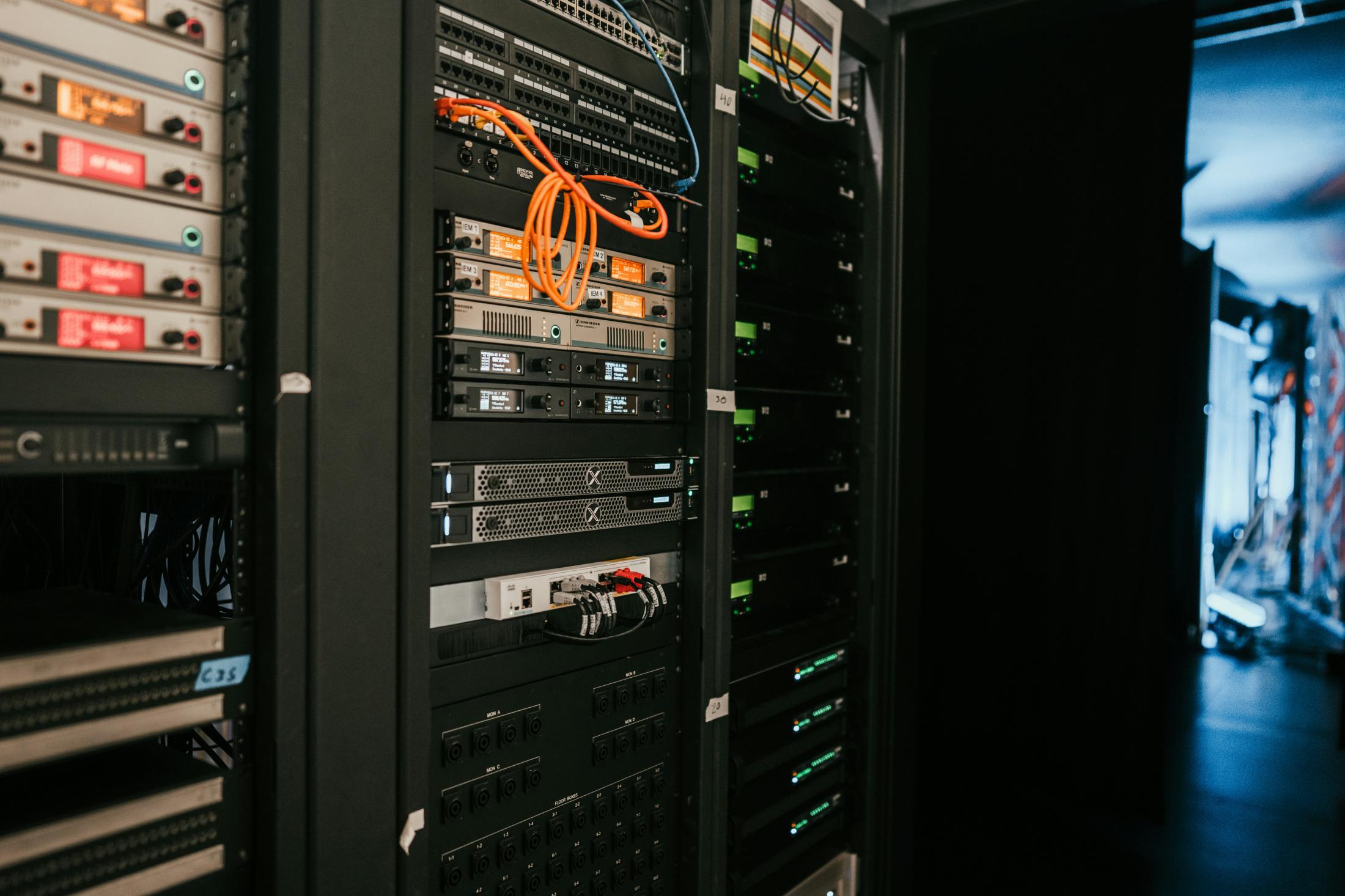
Planning an O&M Program
Before proposing a service plan, BEIJING YINTAI reviews the equipment inventory, site locations, rack layout, warranty status, existing monitoring tools, operating procedures, workload criticality, incident history, available spares, access restrictions, and internal team responsibilities. Customers should also define which systems are in scope, what constitutes a critical incident, who can approve changes, and which response objectives are commercially necessary.
From this information, we can build a service matrix covering remote support hours, preventive visits, escalation paths, resident staffing, diagnostic responsibilities, reporting cadence, spare-parts ownership, logistics, and exclusions. This makes the SLA measurable and prevents assumptions that are difficult to meet after deployment.
Why BEIJING YINTAI
BEIJING YINTAI connects data-center operations with server engineering, system integration, and specialist hardware repair. This hardware-aware perspective helps distinguish a replaceable module from a board-level fault, a thermal symptom from a configuration issue, and a recurring incident from an isolated failure. Customers can also connect O&M support to related services such as enterprise GPU maintenance programs, compute-center expansion, immersion-cooling assessment, and reuse of suitable equipment.
As an international project interface, BEIJING YINTAI coordinates technical communication with partner manufacturing and repair resources while giving the customer a single commercial and project-management contact. Service scope, geographic coverage, response targets, and parts commitments are documented for each engagement.


