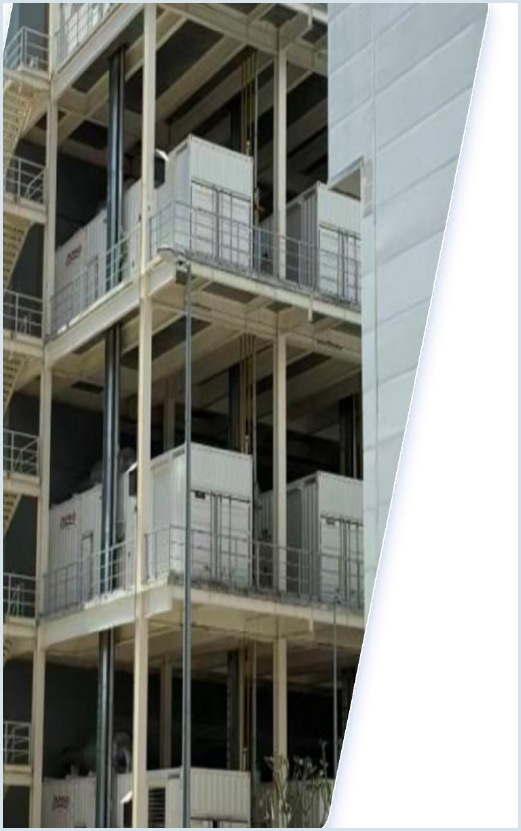


Compute Containers
Compute Containers for Rapid, Modular AI Infrastructure Deployment
Deploy computing capacity faster with factory-integrated compute containers from BEIJING YINTAI. Our turnkey, prefabricated modular data centers integrate IT racks, power distribution, UPS, batteries, cooling, fire suppression, and monitoring into specialized enclosures. Available in 20-foot, 40-foot, or custom sizes, these facilities are engineered for high-density AI and general-purpose workloads.
For edge sites or remote AI infrastructure, traditional civil construction is slow and capital-intensive. Compute containers provide a scalable alternative that reduces conventional on-site construction work and schedule complexity, subject to local requirements. By shifting integration to a controlled factory environment, we coordinate rigorous testing and rapid deployment through qualified manufacturing partners.
As an AI infrastructure solutions provider, BEIJING YINTAI coordinates the entire lifecycle of your modular deployment. From workload profiling to factory pre-integration and site handover, we deliver compute containers supporting air cooling, cold plate, or immersion cooling paths, tailored to your project requirements.
Product Overview
| Feature | Description |
|---|---|
| Factory Pre-Integration | Racks, power, cooling, and safety systems are pre-installed and tested before shipping. |
| Modular Scalability | Expand capacity by adding standard 20ft or 40ft container blocks. |
| Cooling Flexibility | Supports air cooling, cold plate, or immersion cooling for high-density AI workloads. |
| Rapid Deployment | Reduces conventional building work and schedule complexity, subject to local requirements. |
| Comprehensive Subsystems | Includes UPS, batteries, fire suppression, and intelligent DCIM monitoring. |
| Versatile Applications | Suitable for campus open land, field construction, emergency response, and edge computing. |
Core Technology and Service Modules

Factory Pre-Integration and Testing
The foundation of our compute container solution is rigorous factory pre-integration. The entire infrastructure—including IT racks, PDUs, UPS, battery backups, and precision cooling—is assembled in a controlled manufacturing environment. This process includes comprehensive Factory Acceptance Testing (FAT) to validate system performance, thermal dynamics, and safety protocols before shipping.
Advanced Cooling Architectures
Managing the thermal load of modern AI and HPC clusters requires adaptable cooling strategies. Our compute containers support multiple cooling paths depending on configuration and site conditions. For standard enterprise deployments, we offer optimized air cooling with hot/cold aisle containment. For high-density AI racks, containers can be equipped with cold plate liquid cooling or native immersion cooling servers systems. By integrating CDUs directly into the container design, we can target PUE at or below 1.05 under suitable site and system conditions.
Robust Power and Safety Infrastructure
Reliability is paramount in remote or edge deployments. Each compute container features a resilient power architecture, incorporating high-efficiency UPS systems and battery storage to support continuous operation during grid fluctuations. The power distribution handles the high peak loads characteristic of GPU-intensive AI training and inference. Additionally, containers are equipped with integrated fire detection, environmental monitoring, and physical security controls, managed through a centralized DCIM platform.
Modular Scalability and Site Adaptability
Compute containers offer flexibility for infrastructure expansion. Designed as scalable building blocks, you can deploy a single 20-foot container for an edge site or link multiple 40-foot containers to form a scalable AI compute cluster. The specialized enclosures are built to withstand diverse environmental conditions, making them suitable for campus open land, field construction, or mobile computing scenarios. While deployment reduces conventional civil work, our engineering team ensures designs comply with local requirements.
Container Subsystem Matrix
| Subsystem | Components and Capabilities |
|---|---|
| IT Infrastructure | Standard or custom racks; supports General Purpose, AI, and Edge Servers. |
| Power Distribution | High-efficiency UPS, battery backup, intelligent PDUs, ATS. |
| Cooling Systems | In-row air conditioning, cold plate loops, or immersion tanks/CDUs. |
| Safety & Security | Fire detection/suppression, access control, CCTV. |
| Monitoring & Management | Integrated DCIM for real-time temperature, power, and security tracking. |
| Enclosure | 20ft, 40ft, or custom containers with weatherproofing and thermal insulation. |
Traditional Build vs. Prefabricated Deployment
| Aspect | Traditional Data Center Build | Prefabricated Compute Container |
|---|---|---|
| Construction Cycle | Lengthy; involves extensive civil engineering and coordination. | Accelerated; factory pre-integration reduces on-site work and schedule complexity. |
| Scalability | Fixed capacity; expanding requires significant retrofitting. | Highly modular; capacity can be expanded by adding container blocks. |
| Deployment Location | Requires dedicated indoor space or large-scale land development. | Flexible; suitable for campus open land, field sites, and edge locations. |
| Quality Control | Dependent on on-site contractor execution. | Standardized factory assembly with comprehensive FAT. |
| Capital Expenditure | High initial CapEx for building construction. | Phased CapEx; invest in compute capacity exactly when needed. |
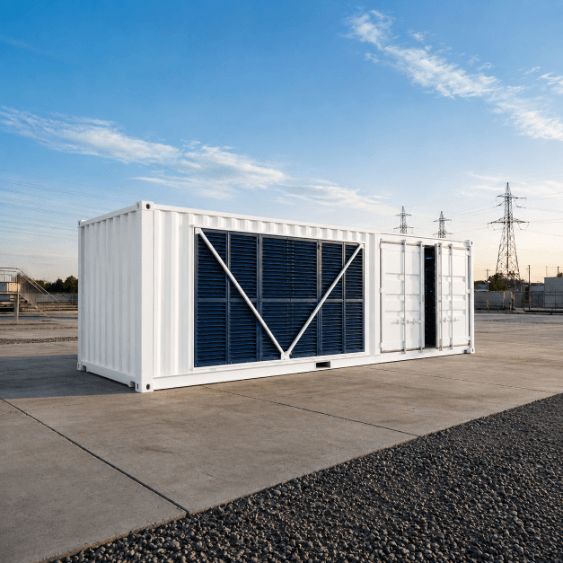
Compute Containers
Prefabricated 20-foot and 40-foot modular data centers with integrated power, cooling, fire suppression, and DCIM for rapid deployment and scalable capacity expansion.
Why BEIJING YINTAI
Choosing BEIJING YINTAI for your compute container deployment means partnering with a factory-direct engineering partner. We leverage partner manufacturing capabilities capable of integrating complex L11 systems, ensuring your modular data center is built to the highest standards. Our engineering-backed approach covers the entire lifecycle—from initial thermal simulation and structural design to FAT, logistics, and site handover. By combining our deep expertise in AI servers, immersion cooling, and rack-scale integration, we deliver a cohesive, optimized infrastructure solution.
Applications and Use Cases
Campus Open Land Expansions
For universities, research institutions, or enterprise headquarters lacking indoor data center space, compute containers provide a rapid way to add AI compute capacity on available campus land.
Field Construction and Remote Sites
Energy companies, mining operations, and large-scale infrastructure projects require robust computing power in remote locations. The weather-resistant nature of these containers makes them suitable for harsh field environments.
Emergency Command and Disaster Recovery
In emergency response scenarios or as part of a disaster recovery strategy, compute containers can be rapidly deployed to establish critical communication and data processing hubs.
Mobile Computing and Edge AI
For telecommunications providers deploying MEC or enterprises needing low-latency AI inference close to data sources, containers serve as distributed edge nodes.
Selection and Project Planning Guide
To ensure the compute container is tailored to your needs, please prepare the following information when requesting a consultation:
1. Workload Profile: Are you deploying general-purpose IT, high-density AI training, or edge inference?
2. Power and Density Requirements: What is the estimated total IT load (kW) and the target density per rack?
3. Cooling Preference: Do you require standard air cooling, or are you targeting liquid/immersion cooling for high-density GPUs?
4. Site Conditions: Where will the container be deployed? Please provide details on climate, available power feeds, and water supply.
5. Form Factor: Do you have space constraints that dictate a 20-foot, 40-foot, or custom enclosure?