



Edge Computing Servers
Edge Computing Servers for Low-Latency AI and Distributed Sites
Edge computing servers process data where it is created, rather than sending every workload to a central facility. For factories, telecom sites, campuses, and utilities, this improves response consistency, reduces bandwidth demand, and supports local data handling.
BEIJING YINTAI provides edge computing servers in compact, short-depth, and project-specific formats. These systems support CPU-only processing, GPU-assisted inference, or mixed compute-and-storage roles, aligning with site space, power conditions, and remote management needs.
Product Overview
| Capability | Buyer Value |
|---|---|
| Compact deployment formats | Fit shallow racks, cabinets, and constrained technical rooms. |
| CPU, GPU, or accelerator options | Match architecture to analytics, vision inference, or local applications. |
| Remote fleet management | Support centralized monitoring and firmware control across many sites. |
| Project-based adaptation | Review airflow, filtration, vibration, and enclosure constraints before final configuration. |
Why Edge Computing Servers Matter

Why Edge Computing Servers Matter
Not every workload belongs in a core data center. When video streams, telemetry, or site-level analytics require local handling, edge computing servers create a practical layer between endpoints and the cloud. This reduces backhaul traffic and keeps local operations less dependent on constant connectivity.
A successful edge platform balances compute density with cabinet depth, service access, airflow, storage, and remote administration. Edge projects should be defined by deployment conditions as much as by processor specifications.
Platform Architecture and Engineering Considerations
Form factor is often the first constraint. Standard deep rack servers may not fit telecom cabinets or retrofitted industrial spaces, making short-depth and compact configurations more practical. BEIJING YINTAI supports these formats to preserve compute capacity within restricted footprints. For standard data center environments, general purpose server platforms may be more suitable.
Compute architecture should follow workload behavior. CPU-focused systems suit lightweight virtualization, gateway services, and local databases. GPU- or accelerator-enabled systems fit video analytics, machine vision, and inference tasks. Storage and networking choices reflect whether the node acts as an inference endpoint, data buffer, or distributed application server.
Thermal and structural fit also matter. BEIJING YINTAI can review airflow, component placement, filtration, vibration, and enclosure interaction. Final implementation should be confirmed against the real cabinet, power profile, and operating conditions.
Edge Workload-to-Configuration Guide
An edge computing server is the IT node. A compute container is the facility layer integrating racks, power, cooling, and monitoring for remote deployment. They are complementary, not interchangeable. If you need a prefabricated infrastructure block, consider modular compute containers for remote deployment.
| Workload Type | Typical Platform Direction | Main Priorities |
|---|---|---|
| Industrial data collection | Compact CPU-based node | Short depth, local storage, stable remote management |
| Video analytics and vision | GPU- or accelerator-enabled edge AI server | Thermal design, stream ingest, inference efficiency |
| Retail or campus applications | Mixed compute node | Space efficiency, serviceability, centralized control |
| Telecom MEC or service node | Compact high-throughput server | Shallow rack fit, strong I/O, remote lifecycle control |
| Remote monitoring and buffering | CPU-focused node with storage emphasis | Local retention, intermittent-connectivity tolerance |
Edge Server vs. Compute Container
An edge computing server is the IT node. A compute container is the facility layer integrating racks, power, cooling, and monitoring for remote deployment. They are complementary, not interchangeable. If you need a prefabricated infrastructure block, consider modular compute containers for remote deployment.
| Dimension | Edge Computing Server | Compute Container |
|---|---|---|
| What you are buying | Server hardware or a small edge cluster | A modular infrastructure package for rack-scale deployment |
| Best fit | Existing rooms, cabinets, telecom racks, and branch sites | Remote, outdoor, temporary, or rapidly deployed facilities |
| Primary scope | Local compute, inference, storage, and remote management | Facility integration including power, cooling, and monitoring |
| How they work together | Can operate standalone or inside a modular site | Can use edge servers as the compute building block |
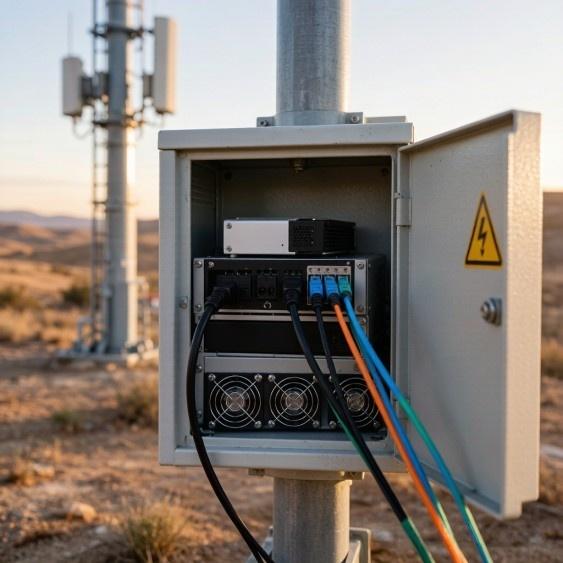
Edge Computing Servers
Compact short-depth servers for edge computing, supporting CPU, GPU, and mixed configurations for video analytics, industrial workloads, and local AI inference with remote fleet management.
Why BEIJING YINTAI
BEIJING YINTAI combines server engineering knowledge and practical deployment scoping for distributed infrastructure. Customers can align general compute, edge AI, and modular expansion paths under one project framework. For specialized hardware requirements, we also offer custom server and motherboard ODM engineering.
Applications and Use Cases
Manufacturing and Industrial Operations
Edge computing servers support local analysis of machine data, visual inspection feeds, and operational events, helping manufacturers process information close to production assets while limiting upstream traffic.
Smart Retail, Campus, and Branch Analytics
Retail and campus sites combine video, access systems, local applications, and reporting in small technical spaces. A compact edge platform consolidates these functions while preserving centralized IT oversight.
Telecom and MEC Deployments
Telecom operators and distributed service providers need compact servers fitting shallow racks for localized application delivery. Edge computing servers act as processing points near users and field infrastructure.
Energy, Utilities, and Remote Sites
Remote locations face intermittent connectivity and limited on-site IT presence. Edge servers provide local data retention, site-level analytics, and control-support functions even with imperfect backhaul links.
Selection and Project Planning Guide
Good edge proposals depend on clear project inputs. Buyers should define workload type, preferred CPU or accelerator, local storage, network uplink, physical space, power availability, and operating environment. They should also clarify if the system runs as a single node, a multi-site build, or part of a modular deployment.
1. Workload profile: Determines CPU, GPU or accelerator, memory, and software direction.
2. Installation space: Drives chassis depth, service clearance, and cable routing.
3. Power conditions: Affects component selection and thermal operating margin.
4. Environmental factors: Indicates whether added filtration or structural review is needed.
5. Management model: Shapes remote monitoring and maintenance requirements.
6. Expansion path: Shows whether to plan for standalone nodes or modular scale-out.


