

AI Data Center O&M: Why Operations Matter After Deployment
The handover date is not the end of an AI infrastructure project. High utilization and tightly coupled power, cooling, networking, and accelerators make operations a design discipline.


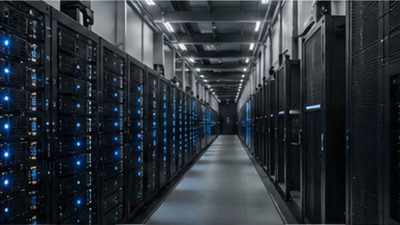
A new AI cluster receives attention during procurement, installation, and acceptance. Then the project team leaves, utilization rises, models change, firmware updates arrive, and the infrastructure begins its real life. AI Data Center O&M, At that point, operation and maintenance—not the launch event—determines how much useful compute the investment produces.
AI infrastructure is unusually sensitive to interactions. A network fault can look like a GPU performance problem. A cooling imbalance can create intermittent accelerator errors. A firmware change can alter power or fan behavior. A storage bottleneck can leave an expensive rack idle. O&M teams need enough visibility to connect symptoms across servers, networking, storage, power, cooling, and software.
Why AI operations are different from conventional server support
General enterprise servers often run diverse workloads with moderate utilization. AI training clusters can sustain high utilization for long periods, while inference services may experience sharp demand changes and strict latency expectations. Dense racks also concentrate failure impact: a problem affecting one power path, switch, CDU, or rack can remove a large amount of compute capacity.AI Data Center O&M.
The latest rack-scale systems strengthen this coupling by treating many compute trays and accelerators as one logical unit. The operational model must therefore cover the complete service chain rather than treating each server as an isolated ticket.
The six building blocks of a practical AI Data Center O&M
1. Asset and configuration control
Teams need an accurate inventory of serial numbers, firmware, drivers, cables, switch ports, rack positions, power feeds, cooling connections, spare parts, and warranty status. Without a trusted baseline, troubleshooting becomes guesswork and changes become difficult to reverse.
2. Monitoring that connects IT and facilities
GPU health, temperatures, memory errors, PCIe events, network counters, storage latency, power draw, inlet conditions, coolant temperatures, pump status, and facility alarms should be visible in a shared operating view. Alert thresholds should reflect the actual platform and workload rather than generic defaults.
3. Preventive maintenance
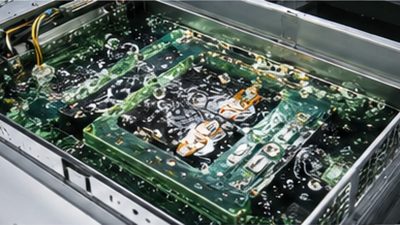
Maintenance schedules may include cleaning, filter replacement, fan inspection, thermal-material checks, cable inspection, firmware review, battery testing, coolant analysis, pump and CDU checks, and spare-part validation. The objective is to detect degradation before it becomes an outage or performance loss.
4. Incident response and escalation
A documented playbook defines who receives an alert, how the failing domain is isolated, when workloads are drained, which logs are collected, when a spare is installed, and when the issue moves to a specialist repair lab or manufacturing partner. Response targets should be realistic for the site location and recorded in the service agreement.
5. Spares and repair strategy
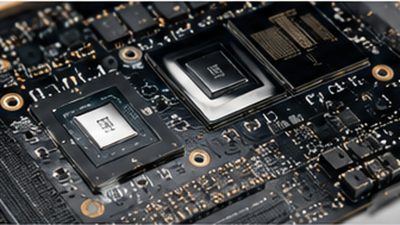
The correct spare pool depends on failure rates, logistics, repair turnaround, cluster criticality, and hardware value. Common field-replaceable units may remain on site, while high-value GPU boards move through a rotating-spares and component-level repair process. The strategy should protect cluster capacity, not simply minimize inventory.AI Data Center O&M
6. Change and lifecycle management
Drivers, firmware, BIOS, BMC, network software, container runtimes, orchestration platforms, and AI frameworks all change. Updates should be tested on a representative node or staging environment, documented, approved, and rolled back when necessary. Lifecycle planning also covers component end-of-life, capacity expansion, warranty expiration, and retirement.
Useful O&M metrics go beyond uptime
- Available accelerator capacity versus installed accelerator capacity
- Mean time to detect, isolate, repair, and restore a failed node or component
- Thermal throttling events and time spent below expected performance
- Job failures attributable to infrastructure rather than application code
- Network retransmissions, congestion events, and storage wait time
- Spare consumption, repair turnaround, repeat-failure rate, and parts aging
- Energy use and cooling performance measured under defined boundaries
These metrics help teams distinguish a cluster that is technically “up” from one that is delivering the expected amount of compute. They also provide evidence for capacity planning and maintenance investment.AI Data Center O&M
When a resident engineer makes sense
Resident support is useful for large or critical clusters, sites with frequent physical changes, limited in-house staffing, complex access rules, or operations that require continuous coordination between IT, facilities, vendors, and users. The contract should define shift coverage, authority, escalation paths, reporting, tools, safety responsibilities, and the limits of the role.
Design operations before the hardware arrives
O&M should be part of the architecture and procurement process. Monitoring interfaces, remote access, service clearance, spare locations, lifting equipment, coolant procedures, cable labeling, maintenance windows, warranty rules, and acceptance data are easier to establish before installation than after an incident.
BEIJING YINTAI coordinates data center O&M programs that may include monitoring, remote and on-site diagnosis, preventive maintenance, resident engineering, incident management, firmware and change support, spare-parts coordination, repair escalation, and lifecycle projects. Coverage, response objectives, supported platforms, locations, and service levels are defined in the agreed scope.
Next step: To plan an O&M service matrix, prepare your equipment inventory, facility locations, workload priorities, current incident history, monitoring tools, spare strategy, access restrictions, and required coverage model.
Suggested Internal Links
- Data Center Operation & Maintenance:
- Enterprise GPU Maintenance:
- AI Data Center Solutions: /solutions/ai-data-center-design-operation
- Data Center GPU Repair:
Editorial Sources for Verification
Editorial Sources for Verification
- Uptime Institute — Global Data Center Survey 2025
- International Energy Agency — Energy Demand from AI
- NVIDIA — NVL72 AI Factory Reference Architecture
Configuration and trademark note: Third-party product names are trademarks of their respective owners. BEIJING YINTAI is an independent solutions provider. Configurations, compatibility, performance, PUE targets, repair feasibility, response objectives, availability, and delivery timelines depend on the final bill of materials, site conditions, project scope, and agreed acceptance criteria or SLA.