

Why AI Factories Need Purpose-Built AI Servers
The rack is becoming the AI system. Here is why GPU count alone no longer defines a production-ready AI server—and what buyers should evaluate instead.

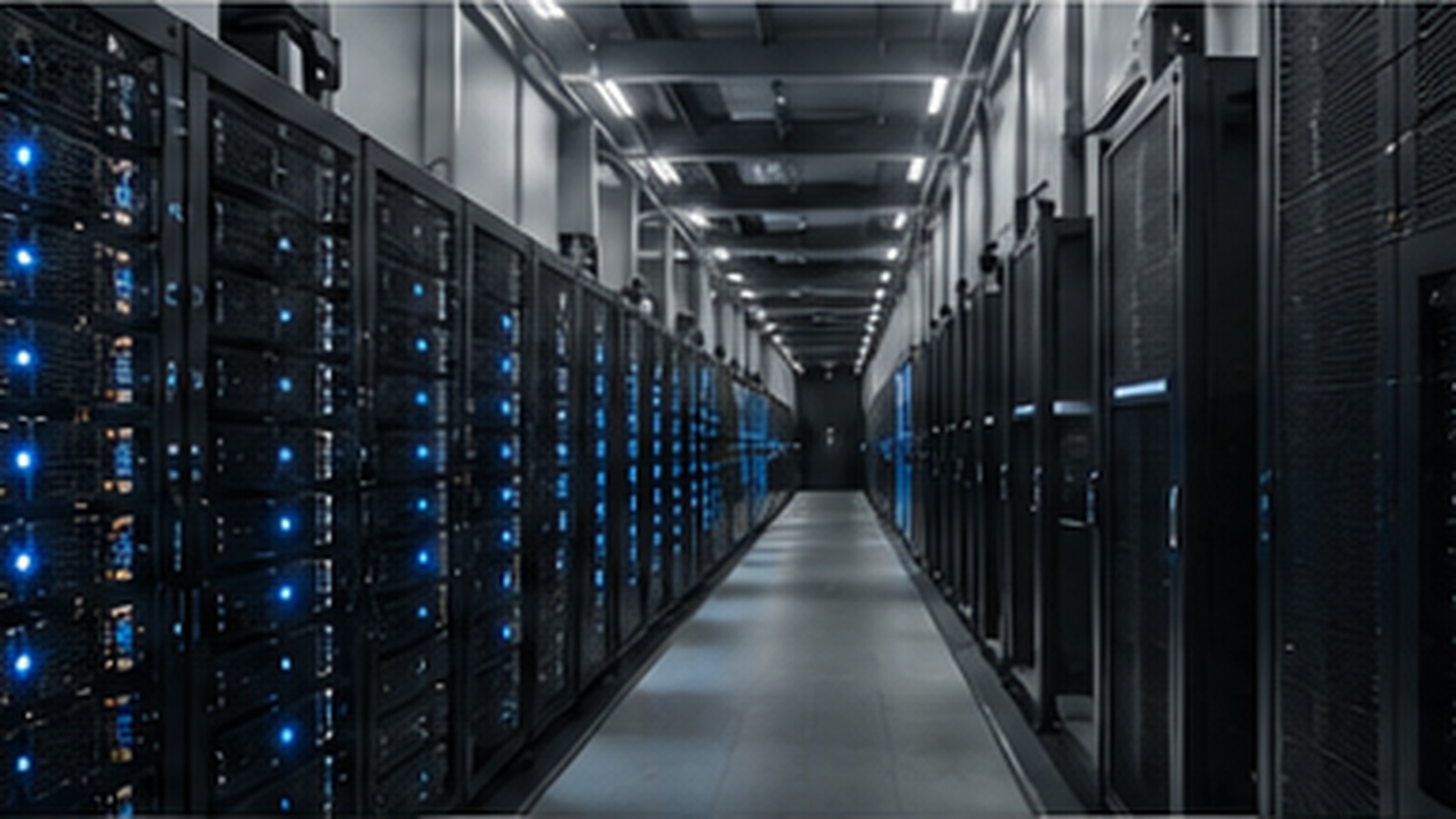
For years, an AI server purchase could be summarized by a simple question: how many GPUs fit in the chassis? In 2026, that question is no longer enough. The latest rack-scale platforms connect dozens of accelerators into a tightly coordinated compute domain, while CPUs, networking, storage, power delivery, cooling, firmware, and software all influence the amount of useful work the system can complete.
This shift matters for enterprises, research institutions, and cloud operators planning private AI infrastructure. Buying more accelerators may increase the theoretical peak specification, but it does not automatically increase training speed, token throughput, or service reliability. A purpose-built AI server is designed around the workload as a complete system—not around the accelerator as an isolated component.
The rack is becoming the unit of AI computing
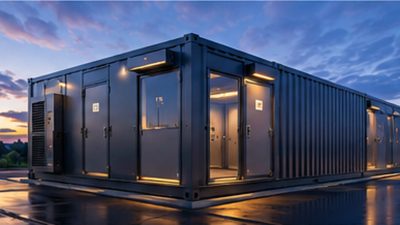
The industry direction is visible in new rack-scale architectures from major platform vendors. NVIDIA’s liquid-cooled NVL72 design treats a full rack as a scalable unit, while AMD’s Helios architecture also connects 72 GPUs with co-designed CPU, fabric, networking, and software components. These products are different in implementation, but they point to the same conclusion: modern AI infrastructure is increasingly engineered at rack level.
That does not mean every buyer needs a 72-GPU rack. Many organizations will get better economics from four- or eight-accelerator PCIe servers. The lesson is architectural: even a smaller AI node should be evaluated as part of a data path that begins with storage, crosses the network, moves through CPU memory, reaches the accelerators, and finally rejects heat into the facility.
Five design areas that determine real AI server performance
1. GPU topology and communication paths
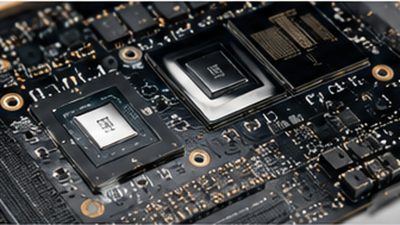
Two servers with the same GPU count can behave very differently. Direct, balanced, cascade, and switch-based PCIe topologies change how data moves between CPUs and accelerators. Training workloads with frequent collective communication need different interconnect behavior from independent inference jobs. The right topology reduces contention and avoids paying for accelerators that spend too much time waiting for data.
2. CPU, memory, and host orchestration
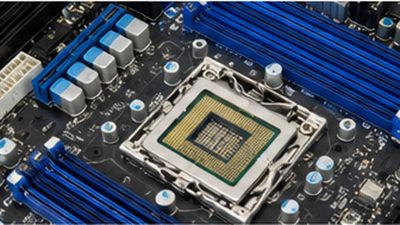
The CPU is not a passive accessory. It prepares data, manages I/O, coordinates software services, handles security and virtualization, and often runs preprocessing or retrieval tasks. Agentic AI and multimodal pipelines can increase concurrency and data movement, making host-core count, memory capacity, memory bandwidth, and PCIe lane availability important parts of the configuration.
3. Networking and storage throughput
Distributed training can expose the network as quickly as it exposes the GPUs. High-speed InfiniBand or RoCE Ethernet, suitable switch architecture, correct cable topology, and fast storage are required to keep the compute layer supplied. For inference, the network design may prioritize request concurrency, east-west traffic, and predictable latency rather than the communication pattern used in pre-training.
4. Power delivery and cooling
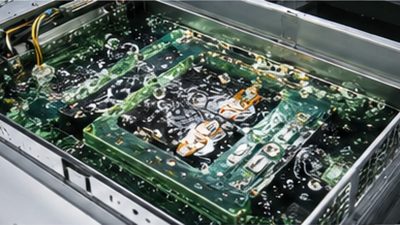
A dense GPU server can operate close to its power limit for long periods. The system therefore needs a realistic power budget, redundant power supplies sized for the final bill of materials, validated airflow, and a rack-level heat-rejection plan. In higher-density projects, cold-plate or immersion cooling may be more practical than trying to force additional heat through an air-cooled room.
5. Validation before shipment
A production system should be tested as the system the customer will actually receive. Burn-in, thermal tests, GPU stress workloads, network checks, firmware review, and software compatibility testing should be defined in an acceptance plan. Validation does not eliminate every operational risk, but it catches configuration problems before equipment reaches a remote site.
Training, fine-tuning, and inference need different answers
A large training cluster usually prioritizes accelerator-to-accelerator bandwidth, synchronized communication, high-speed scale-out networking, and sustained thermal stability. An enterprise fine-tuning platform may need fewer GPUs, but more flexibility across models, datasets, and teams. A production inference server may be designed around VRAM capacity, batch size, latency targets, power efficiency, and the number of concurrent users.
This is why a specification copied from another project often produces disappointing results. The correct starting point is the workload: model size, precision, context length, expected utilization, concurrency, data volume, and expansion plan. Hardware selection follows those requirements—not the other way around.
A practical buyer checklist
- Define whether the primary workload is pre-training, fine-tuning, inference, computer vision, rendering, or HPC.
- Estimate VRAM requirements and expected model growth instead of selecting GPUs by brand recognition alone.
- Confirm the available rack power, room cooling capacity, and acceptable acoustic environment.
- Choose a network architecture that matches the communication pattern and cluster scale.
- Document the required firmware, operating system, drivers, orchestration platform, and monitoring tools.
- Agree on burn-in, thermal, network, and workload acceptance tests before production begins.
What this means for AI infrastructure procurement
The most valuable question is no longer “How many GPUs can we buy?” It is “How much stable, usable AI output can the complete infrastructure deliver within our power, budget, space, and deployment schedule?” That question leads to better decisions about server form factor, topology, cooling, networking, integration, and lifecycle support.
BEIJING YINTAI coordinates configurable AI server projects through qualified manufacturing and engineering partners. The final platform, accelerator set, topology, networking, cooling, validation scope, and delivery plan are confirmed against the customer’s workload and approved bill of materials.
Next step: Planning an AI training or inference cluster? Share your model size, accelerator preference, rack power envelope, networking requirements, and deployment timeline with BEIJING YINTAI to request a workload-matched configuration.
Suggested Internal Links
- High-Density AI Servers:
- AI Compute Center Design & Integration:
- Immersion Cooling Servers:
- Contact BEIJING YINTAI:
Editorial Sources for Verification
- NVIDIA — NVL72 AI Factory Reference Architecture
- NVIDIA — Vera Rubin Platform Announcement
- AMD — Helios Rack-Scale AI Infrastructure
- Intel — Xeon 6+, Networking and AI Systems
Configuration and trademark note: Third-party product names are trademarks of their respective owners. BEIJING YINTAI is an independent solutions provider. Configurations, compatibility, performance, PUE targets, repair feasibility, response objectives, availability, and delivery timelines depend on the final bill of materials, site conditions, project scope, and agreed acceptance criteria or SLA.