

Immersion Cooling Moves into the AI Infrastructure Mainstream
Planning question Cold plate liquid cooling Immersion cooling Heat coverage Selected components Most or all server components Server format Usually conventional rack servers with liquid loops Native immersion-ready or qualified modified servers Residual air cooling Often required Limited or eliminated at server level Service method In-rack component and hose procedures Lift, drain, isolate, and service…

AI rack density is forcing cooling decisions earlier in the buying process. Immersion cooling can unlock density, but only when servers, fluid, CDUs, and facilities are engineered together.
Liquid cooling used to appear late in a data center discussion, usually after an air-cooled design ran into trouble. High-density AI has reversed that sequence. Cooling is now one of the first procurement questions because the choice of accelerator, server layout, rack power, floor loading, and facility heat rejection are tightly connected.
Uptime Institute has reported that some recent AI implementations can exceed 100 kW per rack, even though most conventional enterprise facilities still operate at far lower densities. Open Compute Project working groups are developing common approaches across cold plates, coolant distribution units, immersion systems, rear-door heat exchangers, and heat reuse. The direction is clear: there is no single cooling method for every workload, but liquid cooling is becoming part of mainstream capacity planning.
Why air cooling reaches a practical limit
Air is familiar, serviceable, and effective for many general-purpose servers. Its challenge is heat transport. As component power rises, fans must move more air through tighter channels, while the facility must supply enough cold air and remove the hot exhaust. Fan power, acoustic noise, containment, raised-floor airflow, and room-level cooling capacity can all become constraints.
The transition point is not a universal rack-density number. A 30 kW rack in one climate and building may be straightforward, while the same load in another site may be expensive or impossible. Operators should compare the cost and risk of improving air cooling with the cost and operating model of cold-plate or immersion cooling.
Cold plate and immersion cooling solve different problems
Direct-to-chip cold plates remove heat from selected high-power components, typically CPUs and GPUs. They preserve a familiar rack format and may simplify service procedures, but residual heat from memory, power components, drives, and networking still needs airflow.
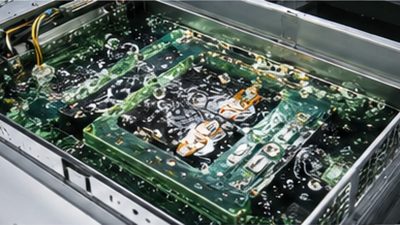
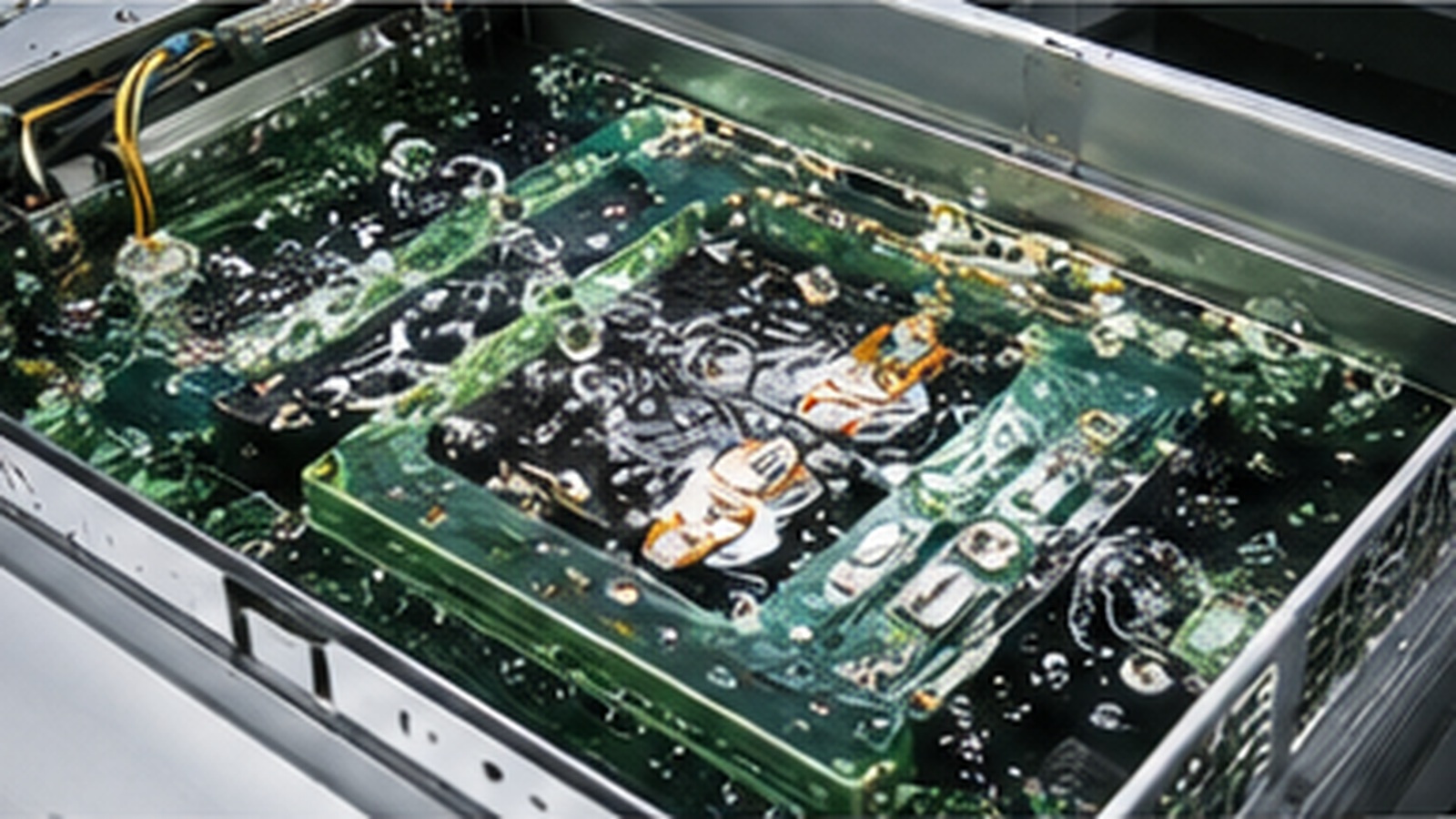
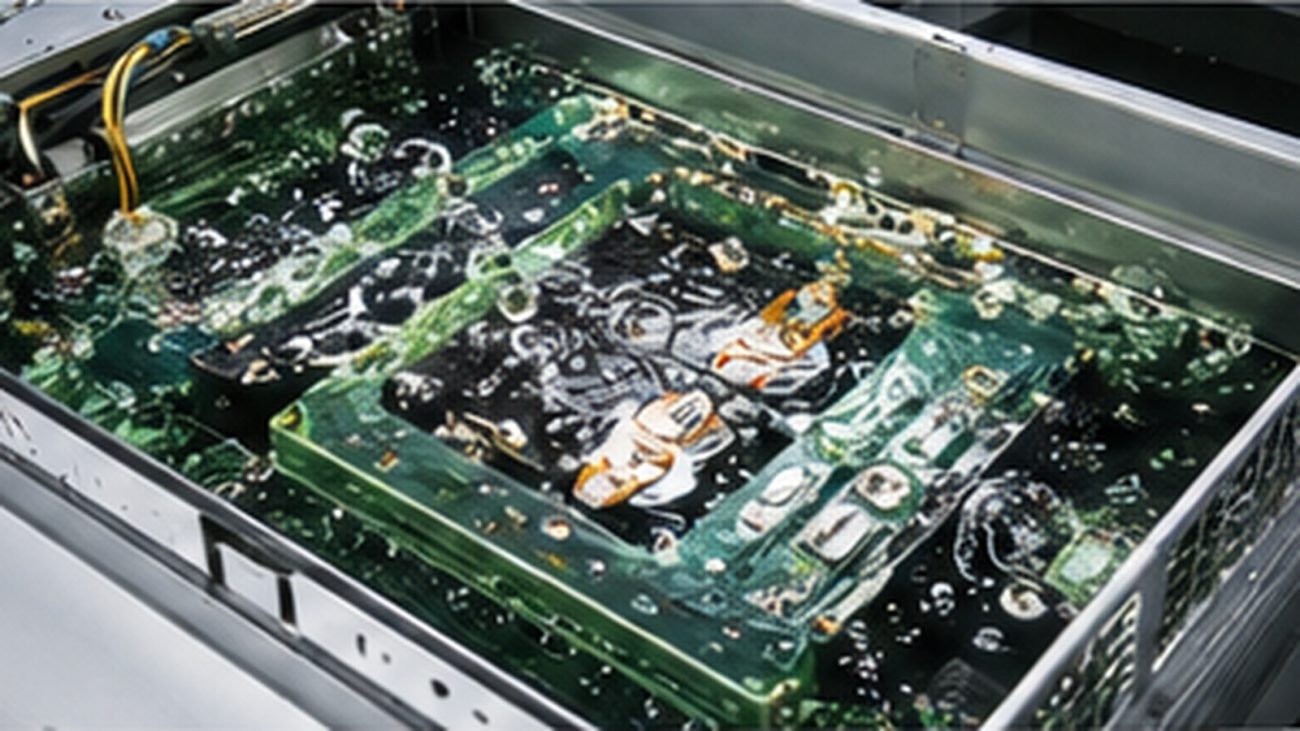
Immersion cooling submerges the server electronics in a dielectric fluid. In a single-phase system, the warmed fluid transfers heat through a heat exchanger and coolant distribution unit. Because the fluid contacts the board and components directly, immersion can capture heat from the complete server and remove most or all high-speed server fans.
| Planning question | Cold plate liquid cooling | Immersion cooling |
| Heat coverage | Selected components | Most or all server components |
| Server format | Usually conventional rack servers with liquid loops | Native immersion-ready or qualified modified servers |
| Residual air cooling | Often required | Limited or eliminated at server level |
| Service method | In-rack component and hose procedures | Lift, drain, isolate, and service under a fluid-handling plan |
| Best fit | High-power racks that retain standard service patterns | Very high density, fan-energy reduction, dust isolation, or constrained space |
The engineering work buyers do not see in a product photo
Material compatibility
Dielectric fluid interacts with PCB materials, cable jackets, labels, plastics, seals, adhesives, thermal interface materials, and service parts. Compatibility must be confirmed for the selected fluid and hardware. A fluid that works well with one server platform should not be assumed to work with another.
Coolant flow and heat rejection
Tank capacity is only one part of the system. Engineers must calculate heat load, fluid flow, pressure drop, CDU capacity, secondary-loop temperatures, redundancy, pumps, controls, and the final heat-rejection method. The complete loop should be evaluated under sustained workload, not just at idle.
Facility and safety planning
A filled tank is heavy. Floor loading, access routes, electrical isolation, leak response, fire strategy, fluid storage, personal protective equipment, and maintenance procedures require site review. Local codes and the fluid supplier’s safety documentation must be included in the operating plan.
Measurement boundaries for PUE claims
Immersion cooling can remove server-fan energy and reduce facility cooling demand. Some projects may target PUE near 1.05 under suitable conditions. That target is not a product specification that can be guaranteed from the server alone. Climate, electrical losses, pumps, CDU efficiency, redundancy, load level, and the chosen measurement boundary all affect the result.
When immersion cooling deserves serious evaluation
- The planned AI density cannot be supported economically by the existing air-cooled room.
- Physical space is limited and the project needs more compute per square meter.
- Fan energy or acoustic noise is a material operating concern.
- The site is exposed to dust or humidity and an enclosed cooling architecture offers operational value.
- The organization can support fluid handling, trained maintenance procedures, and long-term component compatibility management.
A better procurement process
The wrong sequence is to buy immersion tanks first and decide which servers to place inside later. A stronger process begins with workload and heat-load definition, then qualifies the server, fluid, tank, CDU, secondary loop, monitoring, service method, and acceptance criteria as one system.
BEIJING YINTAI coordinates native immersion-ready server selection and project integration through qualified partners. Scope can include servers, tanks, CDUs, secondary loops, monitoring interfaces, compatibility review, and validation, subject to the final statement of work and site conditions.
Next step: Evaluating immersion cooling for an AI cluster? Prepare your workload profile, target density, site cooling conditions, preferred fluid strategy, redundancy requirements, and deployment scale for a project-specific assessment.
Editorial Sources for Verification
- Uptime Institute — Global Data Center Survey 2025
- Uptime Institute — AI and Cooling: Methods and Capacities
- Open Compute Project — Cooling Environments
- International Energy Agency — Energy Demand from AI
Configuration and trademark note: Third-party product names are trademarks of their respective owners. BEIJING YINTAI is an independent solutions provider. Configurations, compatibility, performance, PUE targets, repair feasibility, response objectives, availability, and delivery timelines depend on the final bill of materials, site conditions, project scope, and agreed acceptance criteria or SLA.